Class handout
Virginia permit practice, printable
Forty questions from the cited study bank, arranged like the knowledge exam Virginia DMV describes: 10 road-sign questions and 30 general-knowledge questions. On the official exam, all 10 sign questions must be correct, and 24 of the 30 general questions must be correct. This handout is practice. It is not the DMV exam.
The answer key starts on a new printed page, so you can print the questions alone by choosing a page range. Last updated October 12, 2026.
Related: one-page cheat sheet · after three knowledge-exam failures
Part 1 — Road signs (10)
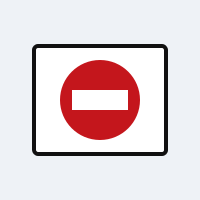
1. This red-and-white sign faces you at the mouth of a freeway exit ramp. Which rule does it state?
- You may enter if you yield to ramp traffic.
- You are going the wrong way and must not drive in that direction.
- The exit ramp is open only to trucks.
- A hospital is at the end of this ramp.
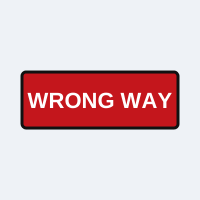
2. You missed a turn and now face this red WRONG WAY sign. Which response is safe?
- Continue, because the sign is only a warning.
- Speed up so you can clear the lane quickly.
- Slow down, pull over, and cautiously turn around.
- Stop in the travel lane until another driver waves you on.
3. This black-and-white sign is posted above a city street. How may traffic move on that street?

- Only in the direction of the arrow.
- In both directions, but only in the left lane.
- Only while making a U-turn.
- In either direction if no other cars are present.
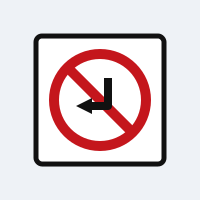
4. This sign, with a red circle and slash over a left-turn arrow, is posted at an intersection. Which movements does Virginia prohibit here?
- Right turns only.
- A left turn, and a U-turn because a U-turn counts as two left turns.
- Through travel in the right lane only.
- Stopping for pedestrians.
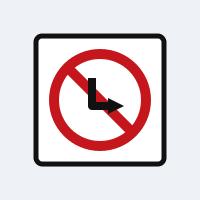
5. This sign shows a red circle and slash over a right-turn arrow. What must you do?
- Turn right only after stopping.
- Turn right from the left lane.
- Do not turn right.
- Turn right if the light is flashing yellow.
6. This sign shows a red circle and slash over a U-turn arrow at a median opening. What does it prohibit?
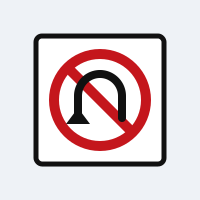
- Changing lanes.
- Making a U-turn.
- Driving straight through the intersection.
- Yielding to traffic already in the median.
7. This white regulatory sign reading NO TURN ON RED is mounted beside the signal. While that signal is red, which movement stays prohibited?
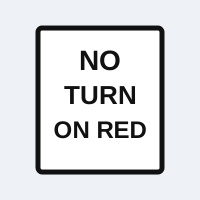
- Turn after a complete stop if the way is clear.
- Turn only if you are on a one-way street.
- Wait until the signal allows the movement. Do not turn on red.
- Treat the red light as a yield sign.
8. This white speed-limit sign shows 25 on a street in clear weather. What is the fastest you may legally drive here?
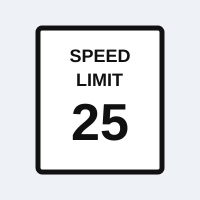
- 25 mph.
- 35 mph, because 25 applies only in school hours.
- 55 mph if you are keeping up with traffic.
- 20 mph below whatever the cars around you are doing.
9. This sign, with a downward arrow, stands at a traffic island. What must you do?
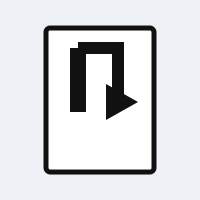
- Keep to the side indicated by the arrow.
- Stop and wait for a flagger.
- Pass the island on either side.
- Make a U-turn around the island.
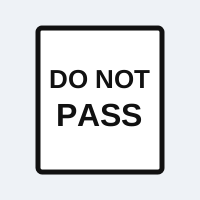
10. This white sign reads DO NOT PASS at the start of a zone on a two-lane road. Which maneuver does it forbid?
- You may pass if the vehicle ahead is slow.
- You may not pass cars ahead of you in your lane.
- Passing is allowed from the shoulder.
- The restriction applies only to trucks.
Part 2 — General knowledge (30)
11. The Driver's Manual says to signal a turn for about how long before you turn?
- Three or four seconds.
- One second.
- Ten seconds.
- Only after you begin the turn.
12. Two vehicles reach an intersection from different roads at different times, and there is no sign. Who goes first?
- The vehicle that arrived first.
- The vehicle on the left.
- The vehicle that is going faster.
- The vehicle turning left.
13. No speed-limit sign is posted on an unpaved road. What is the maximum speed for a passenger vehicle?
- 35 mph.
- 25 mph.
- 55 mph.
- 45 mph.
14. On a two-way street, on which side must you park?
- The right side.
- The left side.
- Either side.
- The side with the most shade.
15. A school bus is loading passengers and its flashing red lights are not on. Do you still have to stop?
- Yes, if the bus is loading or unloading passengers.
- No. You stop only when the lights flash and the stop sign is out.
- No, if you are behind the bus.
- Only if you are on a divided highway.
16. Where should the lap portion of a safety belt sit?
- Low on the lap and against the thighs.
- Across the stomach.
- Behind the back.
- Under the arm.
17. How should your hands grip the steering wheel?
- With your fingers and thumbs, not with your palms.
- With your palms at the top of the wheel.
- With one hand at the 12 o'clock position.
- With both hands in your lap between adjustments.
18. You need to make a hand signal for a right turn. How should your left arm be held?
- Bent upward at the elbow.
- Straight out.
- Bent downward.
- Waving above the roof.
19. You are on an entrance ramp to an interstate. Who has the right-of-way?
- Traffic already on the highway.
- The driver on the ramp, because the ramp is ending.
- Whoever is going faster.
- The driver on the left of the ramp.
20. No speed-limit sign is posted in a business district. What is the maximum speed?
- 25 mph.
- 35 mph.
- 45 mph.
- 55 mph.
21. On a one-way road, where may you park?
- On either side.
- Only on the right.
- Only on the left.
- Only in the travel lane if you use flashers.
22. You are driving the opposite way from a stopped school bus. A median separates your lanes from the bus. Must you stop?
- No, but be ready for someone leaving the bus to act unexpectedly.
- Yes, the median does not change the rule.
- Yes, unless the bus lights are off.
- No, and you may pass the bus in its own lane.
23. Where should the shoulder belt cross your body?
- Over the shoulder and across the chest.
- Behind your back.
- Under your arm.
- Across your neck.
24. Expert drivers try to focus how far ahead?
- 20 to 30 seconds ahead, about one block in the city.
- At the vehicle directly in front only.
- At the lane line beside the car.
- Two seconds ahead, even on a freeway.
25. In a business district, a city, or a town, where are U-turns allowed?
- Only at intersections.
- Anywhere the road is wide enough.
- On any highway.
- Mid-block, if you use the hazard lights.
26. You are entering a road from a private driveway. What must you do?
- Stop and yield to all traffic and pedestrians.
- Yield only to vehicles on your left.
- Enter if you do not see a sign.
- Honk and proceed.
27. A paved highway has no speed-limit sign. What is the statutory maximum for a passenger car?
- 55 mph.
- 70 mph.
- 65 mph.
- 45 mph.
28. The car faces downhill and the right wheels are against a curb. To keep it from rolling into traffic, point the front wheels:
- Toward the curb, to the right.
- Away from the curb, to the left.
- Straight ahead.
- Either way, if the parking brake is set.
29. Must a school bus stop at a railroad crossing when the lights are not flashing?
- Yes. School buses stop at railroad crossings even when the lights are not flashing.
- No. The bus stops only when a gate is down.
- Only if children are aboard.
- Only at crossings marked by a stop sign.
30. How should a pregnant driver wear a safety belt?
- As low on the pelvis as possible.
- Across the belly.
- With the shoulder belt behind the back.
- Only on short trips.
31. As you enter an intersection, which direction should you look first?
- Left, because traffic from the left is closer to you.
- Right, then you do not need to look left.
- Only straight ahead.
- Only in the rearview mirror.
32. You make a legal U-turn. Which lane should you enter?
- The outside, or right-hand, lane of the opposing direction.
- The left lane of the opposing direction.
- The shoulder.
- Any lane, including a bike lane.
33. A bicyclist is in a crosswalk at an intersection that has no painted lines. What must you do?
- Yield to the bicyclist.
- Proceed, because an unmarked crossing is not a crosswalk.
- Yield only if the bicyclist is walking the bicycle.
- Sound the horn and continue.
34. Driving 20 mph or more above the limit, or faster than 85 mph, can be charged as what?
- Reckless driving, a misdemeanor.
- A parking violation.
- An equipment defect.
- A warning that cannot go on the driving record.
35. You leave a car facing up a hill on a road that has no curb. Point the front wheels:
- To the right, so the rear would roll away from traffic.
- To the left.
- Straight ahead.
- Toward the center of the road.
36. The lane is not wide enough to leave three feet when you pass a bicyclist. What must you do?
- Change lanes to pass.
- Pass closer than three feet if you slow down.
- Use the bicycle lane to get around the rider.
- Sound the horn and pass in the same lane.
37. Who may grant a waiver of the safety-belt requirement?
- A licensed physician, for a physical or medical condition, and the person must carry the signed statement.
- Any passenger in the car.
- A DMV clerk, by phone.
- The vehicle owner, by a note left in the glove box.
38. How often should you check the rearview mirror?
- About every 10 seconds.
- Only when you brake.
- Once every few miles.
- Only on highways.
39. You turn right at an intersection with no special pavement markings. Which lane should you turn into?
- The lane closest to the curb.
- The leftmost lane.
- Any lane you can reach.
- The bike lane, then move over.
40. You plan to turn right at a roundabout. Which lane should you use to enter?
- The right lane.
- The left lane.
- Either lane, then change inside the circle.
- The lane closest to the center island.
Answer key
Each note is the explanation stored with that question. The source line is the April 2026 Virginia Driver’s Manual citation from the bank.
Road signs
1. You are going the wrong way and must not drive in that direction.
A Do Not Enter sign means you cannot drive in that direction. Passing it puts you in the path of oncoming traffic.
VA Driver's Manual (Apr 2026) §2 Regulatory Signs
2. Slow down, pull over, and cautiously turn around.
A Wrong Way sign means you are driving against traffic and could meet a vehicle head-on. Slow down, pull over, and turn around carefully.
VA Driver's Manual (Apr 2026) §2 Regulatory Signs
3. Only in the direction of the arrow.
A One Way sign means traffic flows only in the direction of the arrow. Do not enter against that arrow.
VA Driver's Manual (Apr 2026) §2 Regulatory Signs
4. A left turn, and a U-turn because a U-turn counts as two left turns.
A No Left Turn sign makes left turns illegal. In Virginia, a U-turn is treated as two left turns, so it is also illegal where this sign is posted.
VA Driver's Manual (Apr 2026) §2 Regulatory Signs
5. Do not turn right.
A No Right Turn sign means a right turn is illegal. Continue on your way without making that turn.
VA Driver's Manual (Apr 2026) §2 Regulatory Signs
6. Making a U-turn.
A No U-Turn sign means you may not turn around at that location. Choose another legal place to reverse direction.
VA Driver's Manual (Apr 2026) §2 Regulatory Signs
7. Wait until the signal allows the movement. Do not turn on red.
A No Turn on Red sign cancels the usual permission to turn after stopping at a red light. Stay stopped until the signal allows you to move.
VA Driver's Manual (Apr 2026) §2 Regulatory Signs
8. 25 mph.
A speed limit sign states the maximum legal speed for that road when conditions are good. In rain, snow, or ice you must go slower if the posted speed is unsafe.
VA Driver's Manual (Apr 2026) §2 Regulatory Signs
9. Keep to the side indicated by the arrow.
A Keep Right sign marks a traffic island, median, or barrier ahead. Stay on the side the arrow indicates.
VA Driver's Manual (Apr 2026) §2 Regulatory Signs
10. You may not pass cars ahead of you in your lane.
A Do Not Pass sign marks the beginning of a no-passing zone. You may not pass vehicles ahead in your lane, even if the way looks clear.
VA Driver's Manual (Apr 2026) §2 Regulatory Signs
General knowledge
11. Three or four seconds.
Signal a turn about three or four seconds, and at the distance the law requires, before the turn. The required distance is at least 100 feet when the posted speed is more than 35 mph and at least 50 feet when it is 35 mph or less. Cancel the signal after the movement.
VA Driver's Manual (Apr 2026) §3 Turn Signals
12. The vehicle that arrived first.
When vehicles arrive at different times, the one that arrived first goes first. When they arrive at the same time at an intersection with no signs or signals, the driver on the left yields to the driver on the right.
VA Driver's Manual (Apr 2026) §3 Yielding the Right-of-Way
13. 35 mph.
Unless a sign sets a different limit, the maximum for passenger vehicles and motorcycles is 35 mph on unpaved roads, 25 mph in school, business, and residential areas, and 55 mph on other roads.
VA Driver's Manual (Apr 2026) §3 Speed Limits
14. The right side.
On a two-way street, park on the right side of the road. On a one-way road you may park on either side. Pull as far from moving traffic as you can.
VA Driver's Manual (Apr 2026) §3 Parking
15. Yes, if the bus is loading or unloading passengers.
Stop for a school bus with flashing red lights and an extended stop sign when you approach from any direction, unless a median or barrier separates you. You must also stop if the bus is loading or unloading passengers and the signals are not on.
VA Driver's Manual (Apr 2026) §3 Stopping for School Buses
16. Low on the lap and against the thighs.
Wear the lap belt low on your lap and against your thighs. The shoulder belt goes over the shoulder and across the chest, and the belts should be snug.
VA Driver's Manual (Apr 2026) §4 Seat Belts and Air Bags
17. With your fingers and thumbs, not with your palms.
Sit straight but relaxed, with your hands at the 8 o'clock and 4 o'clock positions. Hold the wheel with your fingers and thumbs rather than gripping it with your palms.
VA Driver's Manual (Apr 2026) §3 Hand Position
18. Bent upward at the elbow.
For a right turn, the left hand and arm point upward. A left turn is the left arm straight out. Slowing or stopping is the left arm pointing downward.
VA Driver's Manual (Apr 2026) §3 Turn Signals
19. Traffic already on the highway.
Drivers entering an interstate from a ramp must yield to traffic already on the highway. Yield also means stop if you cannot merge safely.
VA Driver's Manual (Apr 2026) §3 Yielding the Right-of-Way
20. 25 mph.
Unless a sign says otherwise, the maximum speed in a school, business, or residential area is 25 mph. You must also obey a signed school-zone or work-zone limit, and slow down when weather or construction makes the posted speed unsafe.
VA Driver's Manual (Apr 2026) §3 Speed Limits
21. On either side.
On a one-way road you may park on either side. On a two-way street, park on the right. If you park next to a curb, you may not be more than one foot from it.
VA Driver's Manual (Apr 2026) §3 Parking
22. No, but be ready for someone leaving the bus to act unexpectedly.
You do not have to stop when you are traveling in the opposite direction on a roadway divided by a median or barrier and the bus is on the other side. Still watch for people leaving the bus.
VA Driver's Manual (Apr 2026) §3 Stopping for School Buses
23. Over the shoulder and across the chest.
The shoulder belt should lie over the shoulder and across the chest. Never wear it behind your back or under your arm.
VA Driver's Manual (Apr 2026) §4 Seat Belts and Air Bags
24. 20 to 30 seconds ahead, about one block in the city.
Search the whole scene and keep your eyes moving. Looking 20 to 30 seconds ahead, about one block in the city, gives you time to see a risk early. Avoid staring at the middle of the road.
VA Driver's Manual (Apr 2026) §3 Searching and Blind Spots
25. Only at intersections.
In business districts, cities, and towns, U-turns are allowed only at intersections, and they are never allowed on a highway. Check for a No U-Turn or No Left Turn sign before you turn.
VA Driver's Manual (Apr 2026) §3 Turning and U-Turns
26. Stop and yield to all traffic and pedestrians.
When you enter a roadway from a private road or driveway, stop and yield to all traffic and pedestrians. Also stop when you enter a street or cross a sidewalk from a driveway, alley, building, or parking lot.
VA Driver's Manual (Apr 2026) §3 Yielding the Right-of-Way
27. 55 mph.
Where no sign sets another limit, the maximum on roads that are not school, business, residential, or unpaved is 55 mph. Higher limits, including on interstates, apply when they are posted.
VA Driver's Manual (Apr 2026) §3 Speed Limits
28. Toward the curb, to the right.
When parking downhill with a curb, turn the front wheels right, toward the curb. Uphill with a curb, turn them left so the vehicle would roll into the curb.
VA Driver's Manual (Apr 2026) §3 Parking
29. Yes. School buses stop at railroad crossings even when the lights are not flashing.
School buses must always stop at railroad crossings, even when the lights are not flashing. Other drivers should expect that stop.
VA Driver's Manual (Apr 2026) §2 Railroad Crossings
30. As low on the pelvis as possible.
Pregnant women are much safer when buckled, with the belt worn as low on the pelvis as possible.
VA Driver's Manual (Apr 2026) §4 Seat Belts and Air Bags
31. Left, because traffic from the left is closer to you.
Look left first, then right, then left again before you enter an intersection. Traffic from the left reaches you first. Also look both ways at crosswalks, shopping centers, work areas, and playgrounds.
VA Driver's Manual (Apr 2026) §3 Searching and Blind Spots
32. The outside, or right-hand, lane of the opposing direction.
Signal left, stop, and yield to approaching traffic. When the way is clear, turn into the outside or right-hand lane traveling in the opposite direction.
VA Driver's Manual (Apr 2026) §3 Turning and U-Turns
33. Yield to the bicyclist.
Yield to pedestrians or bicyclists crossing within a marked crosswalk or at an unmarked intersection. Turns on red are especially hazardous to people on foot. Let them cross safely.
VA Driver's Manual (Apr 2026) §3 Yielding the Right-of-Way
34. Reckless driving, a misdemeanor.
If you drive 20 mph or more over the limit, or over 85 mph, an officer may charge reckless driving regardless of the posted limit. A conviction is a misdemeanor and can include a fine, a suspended privilege, or jail. If someone dies and your license was already suspended or revoked, it may be a felony.
VA Driver's Manual (Apr 2026) §3 Speed Limits
35. To the right, so the rear would roll away from traffic.
With no curb, point the front wheels so that if the vehicle rolls, the rear rolls away from traffic. Both uphill and downhill without a curb, turn the front wheels right.
VA Driver's Manual (Apr 2026) §3 Parking
36. Change lanes to pass.
State law requires at least three feet of clearance when you pass a bicyclist. If the lane is not wide enough for that gap, change lanes. Do not use a marked bicycle lane to pass.
VA Driver's Manual (Apr 2026) §3 Sharing the Road
37. A licensed physician, for a physical or medical condition, and the person must carry the signed statement.
A licensed physician may waive the belt requirement when using a belt is not reasonable because of a physical or medical condition. The person granted the waiver must carry the signed statement that identifies the person and the reason.
VA Driver's Manual (Apr 2026) §4 Seat Belts and Air Bags
38. About every 10 seconds.
Check the rearview mirror about every 10 seconds so you know if someone is closing in or tailgating. Also check behind you before a lane change, before backing, before a quick slowdown, and on a long, steep hill.
VA Driver's Manual (Apr 2026) §3 Searching and Blind Spots
39. The lane closest to the curb.
Start a right turn from the lane farthest to the right, and turn into the lane closest to the curb unless pavement markings lead you otherwise. Signal about three or four seconds, or 100 feet, ahead of the turn.
VA Driver's Manual (Apr 2026) §3 Turning and U-Turns
40. The right lane.
Stay right to turn right, use either lane to go straight in a two-lane circle, and stay left to turn left. Yield to pedestrians and to traffic already in the circle before you enter.
VA Driver's Manual (Apr 2026) §3 Roundabouts
Jamie Carter, VADrivingTest.com Team. Not affiliated with the Virginia DMV.